


How Does the Section 179 Tax Benefit Work for Business Owners near Dublin, CA Looking to Purchase a Fleet of Sprinter Vans?
How Does the Section 179 Tax Benefit Work for Business Owners near Dublin, CA Looking to Purchase a Fleet of Sprinter Vans?
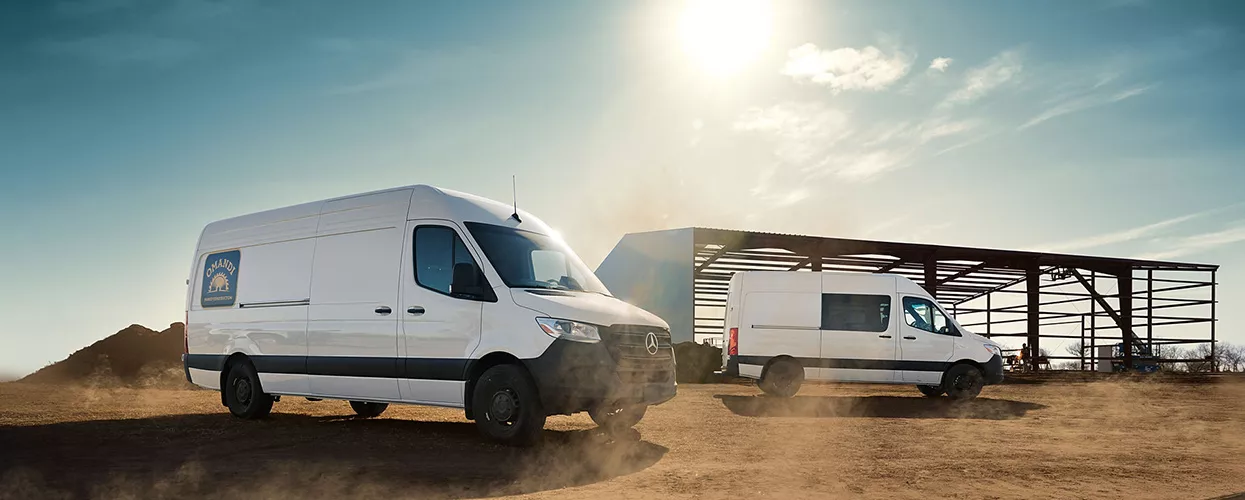
For business owners adding work vehicles, the purchase price is only one part of the financial equation. Section 179 of the federal tax code may allow qualifying businesses to deduct a significant portion of eligible equipment—including certain commercial vehicles—in the year it is placed in service. At Mercedes-Benz of Pleasanton, we help businesses from Pleasanton, Dublin, and Livermore evaluate Sprinter configurations for their fleet needs while encouraging owners to confirm tax treatment with their tax professional.
Why Should Sprinter Fleet Buyers Understand Section 179?
Section 179 allows eligible businesses to elect an immediate deduction for qualifying property instead of recovering the entire cost through depreciation over several years.
For tax years beginning in 2026, the federal Section 179 maximum deduction is $2.56 million. That limit begins to phase out when total qualifying property placed in service during the year exceeds $4.09 million. The deduction is also generally limited by taxable business income.
Key takeaways
- Qualifying business property must generally be placed in service during the applicable tax year.
- The 2026 federal Section 179 limit is $2.56 million.
- Business use matters when determining vehicle eligibility.
- Sprinter commercial vans may receive different treatment from passenger SUVs.
- California has substantially different Section 179 limits from the federal rules.
For fleet buyers near Dublin or Livermore, that last point is especially important: federal and California deductions should be calculated separately with a qualified tax advisor.
How Can Section 179 Apply to a Mercedes-Benz Sprinter?
Mercedes-Benz Sprinter vans vehicles may qualify for accelerated federal tax treatment when applicable requirements are met. Specifically, a Sprinter over 6,000 pounds GVWR may qualify as business property for federal depreciation purposes.
For Section 179, vehicle treatment depends on the exact configuration and how the vehicle is used.
Factors may include
- Gross Vehicle Weight Rating
- Cargo versus passenger configuration
- Percentage of business use
- Purchase price
- Date placed in service
- Other Section 179 property purchased that year
- Business taxable income
A commercial cargo van can also be treated differently from an SUV subject to the separate Section 179 SUV limitation. The IRS sets the 2026 SUV-specific Section 179 cap at $32,000, but that cap does not automatically apply to every heavy commercial van.
That is why we recommend choosing the right vehicle for the business first and having your CPA determine the deduction for that exact Sprinter.
Does the Sprinter Need to Be Used Only for Business?
Not necessarily, but business-use percentage is important.
The IRS states that when a vehicle is used for both business and personal purposes, only the business portion of vehicle costs is deductible.
For certain depreciation benefits, business use generally must exceed 50%. If a van is used exclusively for deliveries, service calls, equipment transport, or other qualifying business activity, the calculation may be more straightforward than for a vehicle that also receives substantial personal use.
Businesses should maintain records showing
- Business mileage
- Personal mileage
- Job or delivery records
- Vehicle assignment
- Purchase and financing documents
- Date each van entered service
Good documentation becomes increasingly important when multiple Sprinter vans are added to a fleet.
What Does “Placed in Service” Mean for a Fleet Purchase?
Buying or financing a Sprinter is not necessarily enough by itself.
For depreciation purposes, property generally must be placed in service, meaning it is ready and available for its intended business use during the tax year.
For example, if a Dublin contractor purchases five vans late in 2026 but several require extensive upfitting and are not ready for work until 2027, the tax treatment could differ from vans that begin operating in 2026.
Businesses planning year-end purchases should coordinate vehicle availability, upfitting schedules, registration, and delivery with their accountant rather than assuming the purchase date alone controls the deduction.
Mercedes-Benz offers Sprinter Cargo Van, Crew Van, Passenger Van, and Cab Chassis configurations, allowing businesses to select a platform around cargo, personnel, or specialized upfit needs. Current national starting prices and configurations can be reviewed through our Mercedes-Benz Vans inventory and model tools.
How Does Section 179 Work When Buying Several Vans?
Section 179 applies across qualifying property placed in service during the year rather than providing an unlimited deduction separately for each van.
For 2026, a qualifying business may elect up to $2.56 million federally, with the deduction beginning to phase out after $4.09 million of qualifying property is placed in service.
Imagine a business purchases several Sprinter Cargo Vans plus warehouse equipment during the same year. All eligible Section 179 property can affect the overall limitation.
This is why fleet buyers should calculate the entire capital-investment plan—not just the vans—before deciding how much Section 179 expense to elect.
Businesses may also need to consider bonus depreciation and conventional depreciation. Qualifying Sprinter vans may be eligible for federal bonus depreciation under current law, including 100% bonus depreciation for qualifying property acquired and placed in service under applicable post-2024 rules.
A tax professional can determine which combination produces the most appropriate result.
What Is Different for California Businesses?
This is one of the most important considerations for Pleasanton-area companies.
California does not use the same Section 179 limits as the federal government.
Current California Franchise Tax Board guidance allows a maximum California Section 179 deduction of $25,000, with that amount beginning to phase out when qualifying property exceeds $200,000. California also does not conform to federal bonus-depreciation rules.
That means a business could potentially claim a significantly larger deduction on its federal return than on its California return.
For a company purchasing an entire Sprinter fleet, this distinction can materially affect tax planning.
What Should Fleet Buyers Consider Before Choosing Sprinters?
Tax benefits should support a good business purchase—not determine one.
First identify your operational requirements
- Number of vans needed
- Payload and cargo requirements
- Standard or high roof
- Wheelbase
- Crew or cargo configuration
- Upfit requirements
- Annual mileage
- Expected replacement cycle
Current Mercedes-Benz of Pleasanton Sprinter offerings include Cargo, Crew, Passenger, and Cab Chassis configurations. Businesses can use the official Mercedes-Benz Sprinter resources to compare platforms before discussing fleet requirements with us.
Mercedes-Benz of Pleasanton also provides new and pre-owned vehicle inventory plus financing resources for Bay Area customers.
What Expert Tips Can Help With a Fleet Purchase?
Talk to your CPA before the transaction is finalized, especially when multiple vehicles are involved.
Give your advisor the VIN, purchase price, GVWR, expected business-use percentage, financing structure, and planned in-service date for each van.
Discuss California and federal treatment separately.
If your vans require shelving, refrigeration, racks, partitions, or other commercial upfits, ask your accountant how those expenditures should be treated.
Finally, do not assume a “tax deduction” means the government reimburses the purchase price. A deduction generally reduces taxable income; the actual tax savings depend on the business's tax situation.
FAQs
Can a Mercedes-Benz Sprinter qualify for Section 179?
Certain Sprinter configurations may qualify when federal requirements are satisfied, including applicable business-use rules. Qualifying Sprinter vans over 6,000 pounds GVWR are potentially eligible for accelerated federal depreciation treatment.
What is the federal Section 179 limit for 2026?
The IRS lists a maximum Section 179 deduction of $2.56 million for tax years beginning in 2026. The deduction begins phasing out once qualifying property placed in service exceeds $4.09 million.
Does California have the same Section 179 deduction?
No. Current California guidance limits the state Section 179 deduction to $25,000 and begins its phaseout at $200,000 of qualifying property. California also does not conform to federal bonus depreciation.
Where can I shop for Sprinter vans near Dublin, CA?
Mercedes-Benz of Pleasanton serves businesses from Pleasanton, Dublin, Livermore, and throughout the East Bay. We can help you evaluate Sprinter configurations and fleet requirements, while your CPA or tax professional determines how Section 179 applies to your specific purchase.
Section 179 can potentially make a major fleet investment more tax-efficient, but federal and California rules differ considerably. At Mercedes-Benz of Pleasanton, we can help you find the right Sprinter vans for the operation while your tax advisor determines the deduction strategy that fits your business.


0 comment(s) so far on How Does the Section 179 Tax Benefit Work for Business Owners near Dublin, CA Looking to Purchase a Fleet of Sprinter Vans?